Marginalia
旁注旁观
A record of how systems run, how people judge, and how the days leave their marks. The code, and how a person gets by inside it.
2018—2026 · 40 essays · English / 中文
LB · AI / CloudNative / Web3 / Security
When agents begin to act for us, what makes the system worth trusting?
This is where I record judgements made where agents, infrastructure and security meet — and how a person lives among them. Not conclusions: the traces reasoning and ordinary days leave behind.
Latest essay
The last question taken all the way down.
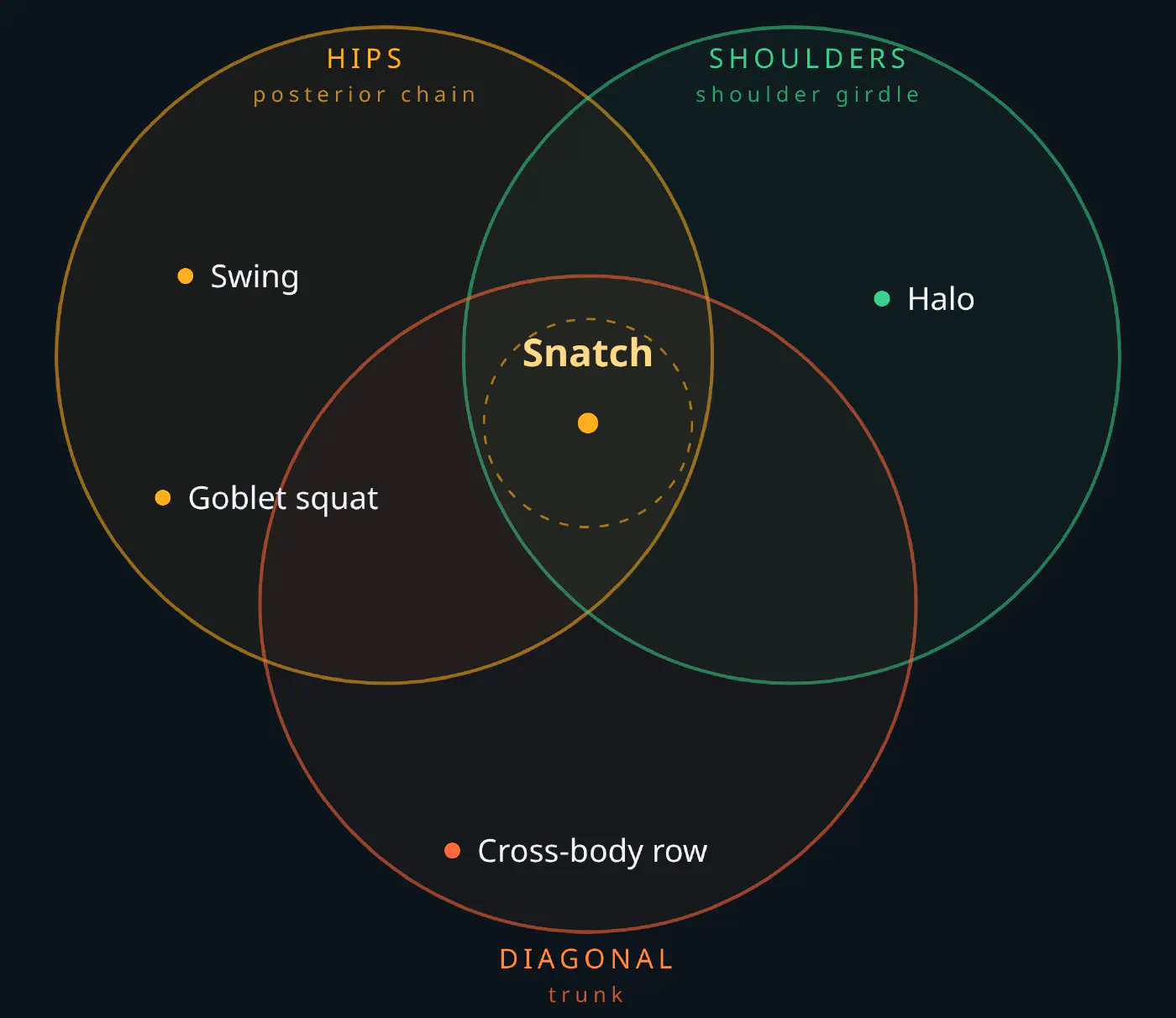
Five Kettlebell Moves on Three Axes
Five kettlebell movements divide across three axes, hips, shoulders and the diagonal, and the snatch sits where all three meet. Each move broken down to joints, muscles and the order of force, with a coverage table for eight movement patterns and three dose plans you can schedule as written.
- No Vector Store: a 25.87 MiB SQLite Index Reaches 86.62 Recall@10 SAG2 moves the semantic judgement from index time to query time. One SQLite index plus BM25 and JEV judgements tops the compared systems on R@5 and R@10 across MuSiQue, 2WikiMultiHopQA and HotpotQA, with a 2.36-second build and zero model calls. The ablations split the gain into two expansion rounds and a shared context, and the cost sits in the last section. AI
- Designing a Coding Agent Without a KV Cache A September 2026 design note starts from one counterfactual, traces six familiar coding-agent flaws to a single cause, and proposes a harness built around a Jev decision layer. Routing arithmetic, token shares and security routing are each marked by source. AI
- Multi-teacher distillation is a token budget TRL's multi-teacher on-policy distillation example ran 60 steps. Instruction following held 20 percent of the prompts and got 1 to 3 percent of the trained tokens, and it was the only domain that barely moved. Open-MOPD calls this token budget misallocation, and fixing it raised the recoverable headroom from 35.6 to 83.4 percent. AI
- The Ontology Divide Is Not Model Size Six papers from late 2025 and 2026 point the same way. The bottleneck in ontology construction moved from who writes it to who can prove it is right, and every number here carries its source. AI
- Evals: Four Numbers That Tell You Whether an AI System Actually Works Evals split into inputs, system, grader and number, with the judge itself graded first. Every figure here is tagged with its source. AI
- The firm grows a basement Two twenty-four-year-old managers at OpenAI wrote a long piece about where AI sits once it joins a company. I went down through all three arrangements with a pencil, and the column that stays blank is the one where somebody has to keep the books. Essay
- Retrieval as Navigation: DecisionRAG Asks a Tree Instead of Scoring a Corpus DecisionRAG runs no first-stage search and builds no vector index. Each level puts the candidate titles into one shared context and answers a batch of yes/no questions in a single forward pass. It wins six of nine metrics, and the three losses and the costs are in the body. AI
- One Graph, Fifteen Spellings, a 28-Point Difference Oracle wrote the same knowledge graph in 15 text formats and ran nine frontier model configurations over four benchmarks. Extraction barely notices, with 1.3 to 3.9 points of spread. Structural reasoning moves 28.4. AI
Film notes
Some structures are clearer in two minutes of film than two thousand words.
Each long essay comes with a short explainer: the figure first, the conclusion after.
Read the accompanying essayAbout the author
I’m LB. I write about systems, and about people.
Most pieces begin with one concrete question: a piece of source code, a protocol, a design that failed. A few are only about people. I write to keep the process, not to hand down an answer.